


Happy weekend! Our apologies to customers who got shorted on tomatoes Wednesday. Sometimes we don’t do a perfect job of forecasting the harvest. “It’s tough to make predictions, especially about the future.” – Danish proverb
Amongst the rainbow of tomatoes, we’ll also have gorgeous little eggplants, fresh figs, and green Guatemalan heirloom butternut squash.
Still not open for retail. If you’re new to ARTfarm or haven’t been to see us since before the COVID-19 pandemic began, please read on to familiarize yourself with our new socially distanced pre-order arrangements. We are not holding regular retail farmstands at this time.
Masks are mandatory. Please help us protect our at-risk family members and customers!

Socially distanced pickups for now at ARTfarm 
Drastic measures for drastic times…mid March 2020. 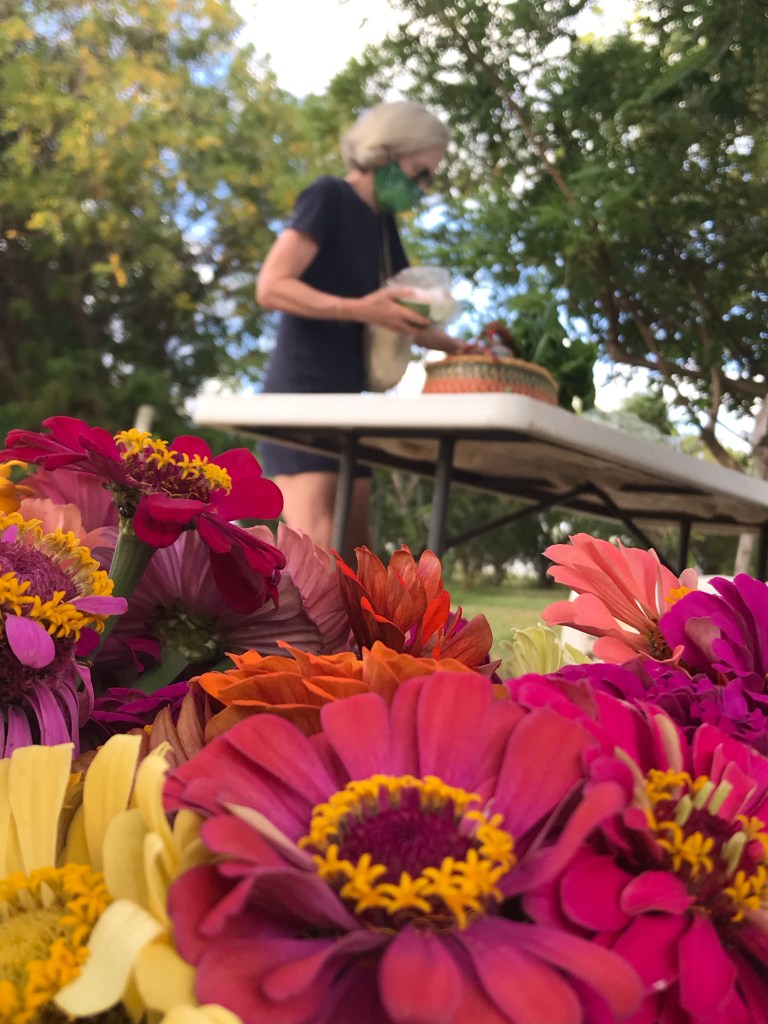
…masks mandatory, bring your own basket/bag or box! 
eating healthy keeps the immune system strong! 
During the COVID-19 pandemic, pre-order online through our website and pick up your produce in a specific timeslot to avoid crowds. 
Pre-weighed, bagged and priced produce. Customers don’t handle the produce. 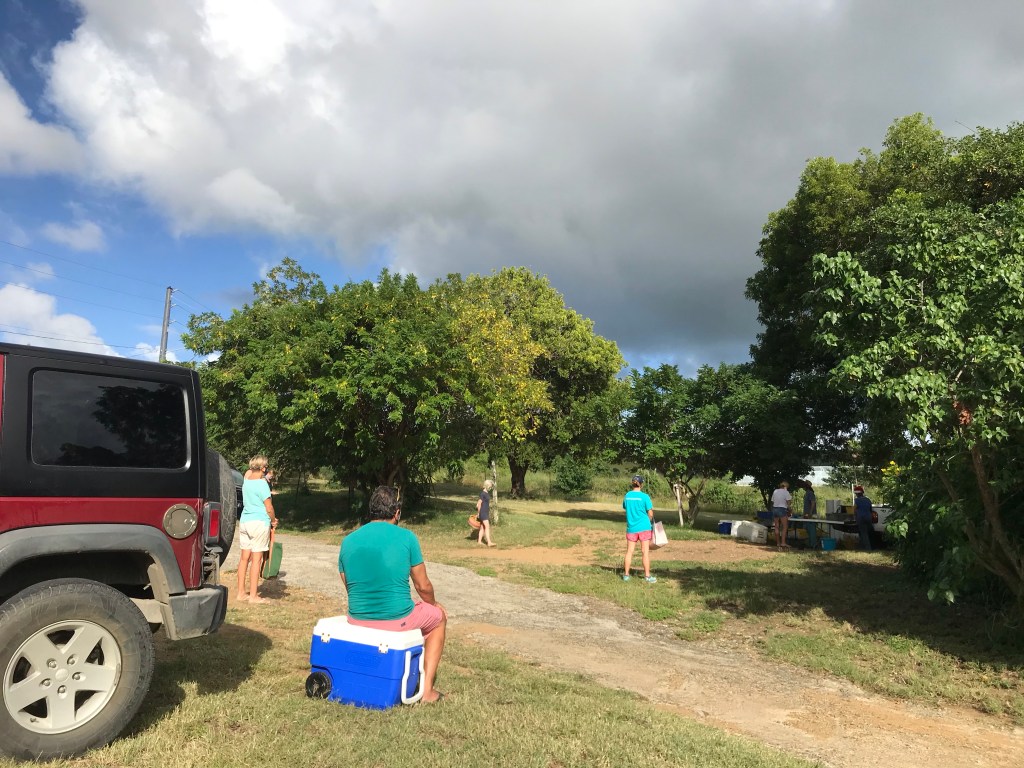
Staying socially distanced at farmshare distributions protects the farm staff and our customers! Each customer arrives in their pickup group time and waits for their name to be called. Quite a few customers actually prefer our pre-order system. 
Staying socially distanced at farmshare distributions protects the farm staff and our customers! Quite a few customers actually prefer our pre-order system. Here, Christina is checking her list and checking it twice… 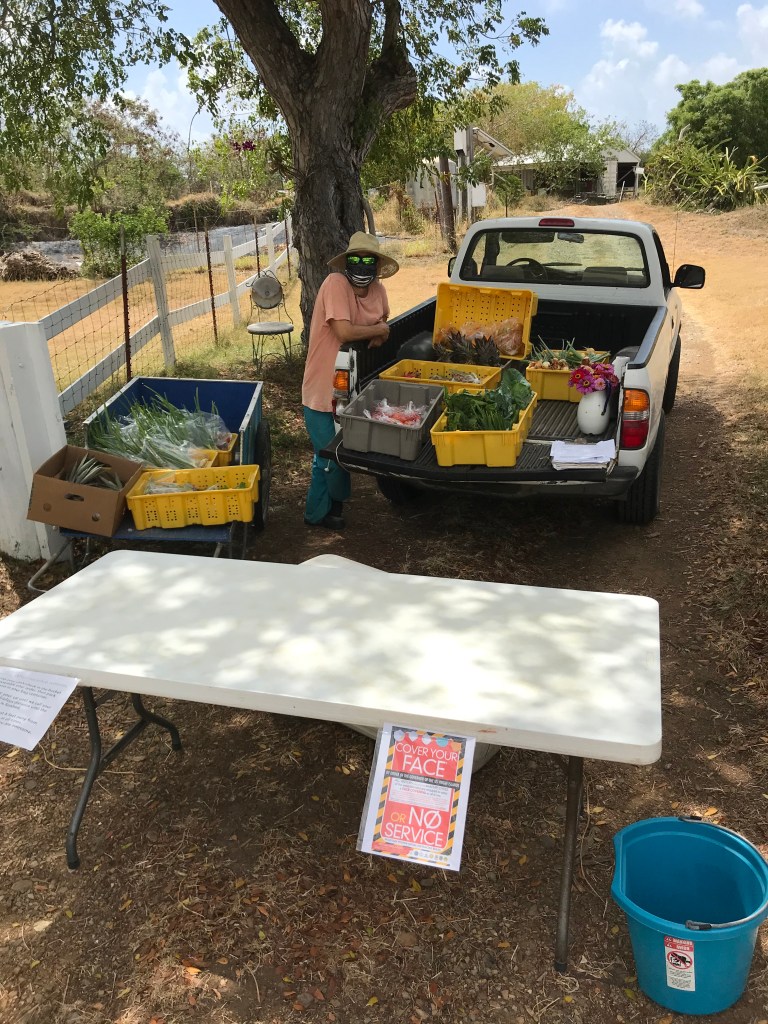
Farmer Luca at our socially distanced pre-reserved farmshare distribution during COVID times in spring 2020.
New to ARTfarm pandemic procedures? Welcome. Here are the details:
It’s not the usual farmstands at ARTfarm since the 2020 pandemic. By popular demand, we’ve stuck with ‘pandemic’ pre-reserved pickup times in the busy season. We are only accepting pre-sized pre-orders called ‘farmshares,’ plus add-on items, with pre-reserved pickup time slots for a minimum of waiting or mingling in these COVID-19 times. (We know you’d prefer to set your own schedule and shop for just one or two items, and we’re sorry for the inconvenience. This system is to prevent our typical long tightly packed customer lines and to protect you and us, the farmers and our family, from exposure, while maximizing distribution of healthy food to the community.)
ARTfarm pandemic RULES FOR CUSTOMERS (updated, click here):
During the COVID pandemic, CUSTOMERS are required to:
- READ and follow our rules and procedures. Most all questions about getting farmshare produce are already answered on this website, we are SO busy, please try to find the answer before contacting us!
- be kind, be patient with us and each other, no drama please
- meet an order minimum of one farmshare size
- commit to a pickup time. Set a reminder for yourself. If you can’t make it, have a backup plan with a friend or neighbor. We cannot field requests for time adjustments. Three missed pickups (or two in a row) means this is not a good partnership, and we will ask that you find a farm with more flexible hours!
- arrive ON TIME for your group, not early, and wait for your name to be called (we’ll generally call you in order of orders placed within your group)!! Do NOT jump your timeslot or ask to cut the line please. If you’re going to be super late or arrive after the last group starts, please send us a text at (340) 514-4873
- if you or someone in your contact circle/household are experiencing COVID-19 symptoms or have recently tested positive, DO NOT attend pickup. Surviving COVID (or getting the vaccine) is not yet clinically proven to infer permanent immunity, prevent asymptomatic spread or otherwise make you “safe”. We have at-risk family members and customers. Please follow CDC guidelines if you are an ARTfarm customer. We believe in building a healthy immune system, but we don’t have a magic farm immunity bubble.
- consistently maintain 10-15 feet of distance between all individuals
- wear masks to keep each other safe
- sanitize hands before you exit your vehicle
- bring exact change or a check and pen
- restrain pets near or in your vehicle, please don’t approach our pickup table with a pet or allow them to roam free in our parking lot
- bring your own boxes, bags, baskets to pack up your order
- wait to bag produce until we have completely assembled and totaled your order on the table
* * * Everyone goofs up once in a while, even us, and we accommodate that. But please be aware of our three strikes policy for the pre-order system. Customers who REPEATEDLY:
- request a lot of help from us with the ordering and email system
- contact us with questions answered on this website
- interrupt our workflow before or during distributions to ask for special accommodations
- ask us to ‘flex’ them in ahead of others when there is a parking lot full of people waiting patiently (who also have busy lives)
- have repeated lapses, no-shows or emergencies, leaving us with unsold farmshares
- bring drama, stress or bad energy
To understand WHY we are doing what we do, click HERE to read about ARTfarm LLC and CDC-recommended COVID-19 precautions we are taking. To learn HOW to place your order, click on the menu below for a step-by-step guide.
New to ARTfarm preorders? STEP BY STEP PROCESS (click here):
- READ the RULES FOR CUSTOMERS above
- Wait for the new order form to post, around 10-11am the day before the scheduled pickup – usually posts on Tuesdays for Wednesday afternoon pickups, and Fridays for Saturday morning pickups, but may shift for major holiday weekends
- Visit artfarmllc.com or check your farm email subscription for the fresh-from-the-field weekly signup page (subscribe here). The current signup page will have a pickup date IN THE FUTURE, not already past. Check the date for freshness! If you missed the farmshare distribution posted, see step 2.
- Sign up with our current online form (a unique link appearing as a button at the bottom of the weekly signup post/email)
- Using the current online order form, choose a minimum of one farmshare size of pre-selected, pre-priced ARTfarm produce (contents listed below, typically small or large – in high demand times 1 share may be set as the maximum)
- Commit to a pick-up time slot. This is a firm commitment!
- Choose any add-on items (limited supplies of reservable things). There is also a list of ‘extras’ which are available first-come, first-served on request at pickup.
- Add a comment for special requests, extras, preferences, to answer our question-of-the-day, or whatever’s on your mind
- Check your email for a confirmation! (the email you used on the order form is the one you should check – it is an automated response and is sent out immediately, and may be hiding in your spam or ‘all mail’ folder. For more tips, see the troubleshooting section in yellow below)
- Arrive promptly but NOT EARLY for your pickup appointment in the ARTfarm parking lot on the specified date in your confirmation email. If early, wait inside your vehicle and decide what herbs you want! Sanitize your hands when getting out of your vehicle. Please maintain plenty of space between customers, and between us and you when you approach the pickup table for your appointed pickup time. We’ll be wearing masks and require you do the same.
- Bring exact change or a check to drop in the bucket – we are not handling any money. Bring your own pen for a check.
- There may be extra items available to add to your box at pickup time, so you may wish to bring some extra small bills or wait to fill in your check amount. Please bring your own pen.
- Bring your own bags or box to put your produce into. We’ll place your items on the sanitized table, some things will be pre-bagged, you’ll pack your own bags or box for the rest. Wait to bag until we do a final count of your items to make sure we don’t forget anything. We are trying to reduce the number of shopping bags we distribute, so please bring an extra bag, box or basket to your pickups this season.
- No substitutions or price adjustments. To maintain sanitation and keep things moving, we are not swapping items, handling payments or making change. (As always we’ll be flexible where we can within reason.)
- YOU ARE AWESOME for supporting our small family farm and accommodating our needs for COVID safety.
Frequently Asked Questions about Pre-Orders (click here):
Q: Why isn’t the order form up yet/all the time?
A: We are a small seasonal farm growing small amounts of over 45 different crops. Not everything is available every week, or for every distribution. We post the reservation form as soon as we have harvested all the salad greens and know how many families we can possibly serve in that distribution, and can accurately estimate the number and contents of the farmshares, add-on item quantities and extras that will be available. That way you know exactly what you are getting with only slight variations.
Q: When is the next order form going to be posted?
A: We typically post farmshare pre-order posts on Tuesday and Friday mornings between 10-11am.
Q: What do you have?
A: This question is frequently asked and makes the ARTfarmers grouchy: because it’s a long and ever-changing list, and it’s disruptive to our workflow and focus to have to stop and try to recite it over the phone, when we have a perfectly good website with this information.
The most recent signup page will have a complete list of our current offerings. You’ll find it on our homepage at artfarmllc.com. If it’s expired, it will be a close approximation of what will be available next time with seasonal changes.
Planning an event or visit to St. Croix and want to know what we’ll have on some future date? We can’t predict the future, but you can research easily on our website: Check out our “What We Grow” page.
Q: Where is the ARTfarm located?
A: To check our current farmstand hours, get directions to the farm, and other information about visiting us, read the Visit Our Farmstand page and check out the Google Map posted on every page of this website. (During the pandemic, we are CLOSED to the public and running a socially distanced pre-order system.)
Q: Can you send me a price list?
A: We do not publish price lists the way wholesalers do. Our produce is hyper-seasonal; a price list would have to change every week. We are a staff of two. Our prices are fairly consistent but certain salad greens and heirloom tomatoes may fluctuate slightly depending on availability and growing conditions. The weekly post on our homepage lists prices and availability.
Food service professionals can ask to speak with us about bulk needs, and we do sell to chefs, farms, restaurants and value added producers, but not everything we grow is available at all times or always in industrial quantities (unless planned in advance).
We can’t predict the future, but you can research easily on our website: The search box, posts archives, and tag cloud features on our website are great resources for finding out what crops we have and when: you can look at past seasons to see what we typically grow; search “winter”, “spring”,”summer” or “fall”, use our “Musty Old Posts” menu to search by month, or use our tag cloud to browse by crop.
Q: I can’t find the order link.
A: The order form link is in the post. “The post” is typically the first article you see on the Farm Blog page of our website, and will have a recent publishing date and will have the pickup date, and “signups” or “pickups” or “farmshares,” in the title. If you’re subscribed to farm emails, the post will arrive in your inbox about three seconds after we send it out.
The link to the pre-order form is always a large, bold button, at the very bottom of the current/active post/email, AFTER all the stuff you need to read before ordering, like descriptions of what is in the farmshares and information on participating in the farmshare system, and BEFORE a handy troubleshooting guide full of tips to help if you have trouble with using the order form or locating your confirmation email.
If the link says it’s expired, that is because you clicked on an old post or old email that has been closed out. New posts are published Tuesdays and Fridays. Either look for a more current post, or wait for the next one.
Q: I didn’t get my confirmation email. Can you check my order for me?
A: Sadly, no. Checking individual orders has been a huge timesuck for us and we are painfully busy this season. We just can’t anymore. Literally all customers find their confirmation email or otherwise locate and solve the issue, after asking us for a solution multiple times and finally just reading and following the troubleshooting guide provided on this site. You CAN solve this yourself.
Hopping on the computer all day long twice a week to provide IT support isn’t effective, or working for us. Besides, all the advice we have to give on the topic is below, so you’re better off saving time by just following these steps:
- double check the date on the form/link you are attempting to use
- confirm that you are monitoring the same email account that you typed into the form
- if the automated confirmation email is not immediately found, check your spam folder AND the ‘all mail’ folder
- search for an email from ‘noreply@jotform.com’
- set up a filter in your email program to catch ARTfarm emails, and set it to check all your mail including the old stuff – if you don’t know how, ask a techy friend or Google it
- revisit the form and make sure all required fields are filled/selected
- make sure your email was typed in twice (CORRECTLY!) on the form
- just try again
- use a cellular device (smartphone or tablet) that isn’t using WiFi internet
- restart your browser/device
- clear your cache and cookies in your browser/device
- reboot your router (unplug it for a minute and plug in again)
- ask a friend or neighbor or computer-savvy IT person to help you
- we say this gently, but if you can’t get our system to work for you, please consider supporting another one of the great local farms or markets on our island with less technical requirements. Our pandemic system isn’t for everyone.
Q: I can’t get the form to work. Can you take my order over the phone/text/email for me?
A: No. Sorry. We know it’s frustrating and the pre-COVID days were better. But we can’t do pre-orders outside of the order form. 45 orders x 10 minutes is 7.5 hours that we couldn’t spend farming or packing orders etc. etc. Please carefully re-read the instructions above, and also follow the workaround advice listed in the previous question and right above the order link, and seriously try the suggestions – especially asking a techie friend to help you out. Most customers can manage this, you can too!! 😉
Q: I’d like to change my timeslot.
A: Short answer, no.
- We don’t have a dedicated receptionist, so moving people around on the schedule is time consuming and throws off our workflow.
- This is a pandemic, and you are one of maybe forty to sixty custom orders per distribution.
- We refuse to let quality drop, so our workload is greatly increased nowadays with additional tasks.
- In the wee hours of the morning of a distribution day the customer schedule has already been printed, and we are up before dawn working continuously at an extremely brisk pace to harvest and pack until the time you see us. We aren’t available to check our phones or rearrange the schedule for you.
If you can’t make it at all, text us as soon as you know. If you can’t come during your timeslot due to a legitimate emergency, notify us and send a friend to pick up. We are absolutely sometimes running 10 minutes late in the schedule in an effort to offer more items, and most customers are patient as we catch up the groups.
Our pre-order system requires cooperation and is a lot more time-intensive for us. If our system proves not to work for you, we understand. There are other farms and farmers markets operating on St. Croix who have open retail hours available and can offer more flexibility for you. We are balancing our personal safety with providing healthy food to the community. Be kind and be mindful, please. Most of our customers respect our time and appreciate what we do and we are so grateful!
Q: I never get your Facebook posts.
A: Aaaahhh, we have no control over Mark Zuckerberg’s ever changing algorithms. We recommend visiting our website directly for farm news and pre-order posts, or better yet subscribing to farm emails. And then, checking and reading your email. 😉
Q: I went to the signup page but it was over.
A: The current signup page will have a pickup date IN THE FUTURE, not already past. Check the date for freshness! Clicking on last week’s button won’t work. If you missed this farmshare distribution posted, wait for the next one in a few days. Posts go up Tuesdays and Fridays.
Q: Can you save me some (insert highly popular item here) if I can’t get there on time?
A: Man, we really do our best to accommodate people. We try to make many items reserveable in these pandemic times. We love our customers and know many of you by name and your favorite items too! But you, special you, are one of many, many customers we are trying to serve in a very limited timeframe, and even if we say we’ll try to save you this or that, we often can’t, and we’re going to feel bad. We encourage you to put your request in the comment box of the order form, and we’ll certainly try…but keep your expectations flexible beyond your actual order.
Farmshare choices for Saturday, January 30th, 2021:
We will have 25 small farmshares, 15 tomato shares and 10 large farmshares available for scheduled pickup Saturday. You can also order and specify a neighbor, friend or family member to pick up your order. The minimum order is one farmshare, and you CAN order more than one size farmshare. Add-ons and extras are not currently available independently of a farmshare purchase; to minimize community contact during the pandemic.
Large farmshare, $50, will include:
- 1 bag of sweet salad mix
- 1 bag of baby spicy salad mix
- 2 pints cherry tomatoes
- 2 lbs. heirloom tomatoes
- 2 lbs. cucumbers
- 1 bag small sweet stuffing/frying peppers
Tomato farmshare, $17, will include:
- 2 pints cherry tomatoes
- 1 lb. tomatoes
(Add this on to another share if you like!)
Small farmshare, $20, will include:
- 1 bag of sweet salad mix
- 1 pint cherry tomatoes
- 1 lb. slicer tomatoes
- 1 bunch herbs
Double Small farmshare, $40, will include:
The contents of the Small farmshare listed above, but double: one for you and one for a friend. Take distribution into your own (recently washed) hands, deliver to a neighbor or loved one!
Additional Limited Quantity Reservable Add-Ons*
(please add to your total)
2 lbs. heirloom tomatoes: $10
2 lbs. zucchini: $6
1 mini Bok choi: $2.50
1 bag baby ginger: $4
1 bag red Hawaiian turmeric: $4
1 bunch extra garlic chives: $2
1 bunch extra Italian basil: $2
1 bag red Thai chilis: $2
1 bag large red cayenne peppers: $2
1 bag sweet (frying or stuffing) peppers: $3
1 Giant Belgium heirloom tomato seedling: $5
1 Black From Tula heirloom tomato seedling: $5
1 Prudence Purple heirloom tomato seedling: $5
1 bunch of nine bright assorted color zinnia flowers: $5
*(if these are sold out on the order form – or you’d like more than one of an item – there are often additional extras available at the time of pick-up, so if you can’t reserve, leave a note in the comments, bring some extra cash or wait to write your check total. Bring a pen.)
Extra Add-Ons (no reservations)
(Must accompany farmshare purchase, these items cannot be purchased individually. No reservations on these items, they are all first come first served during your pickup slot):
- Fiddlewood Farms FRESH LOCAL GOAT CHEESE: $9
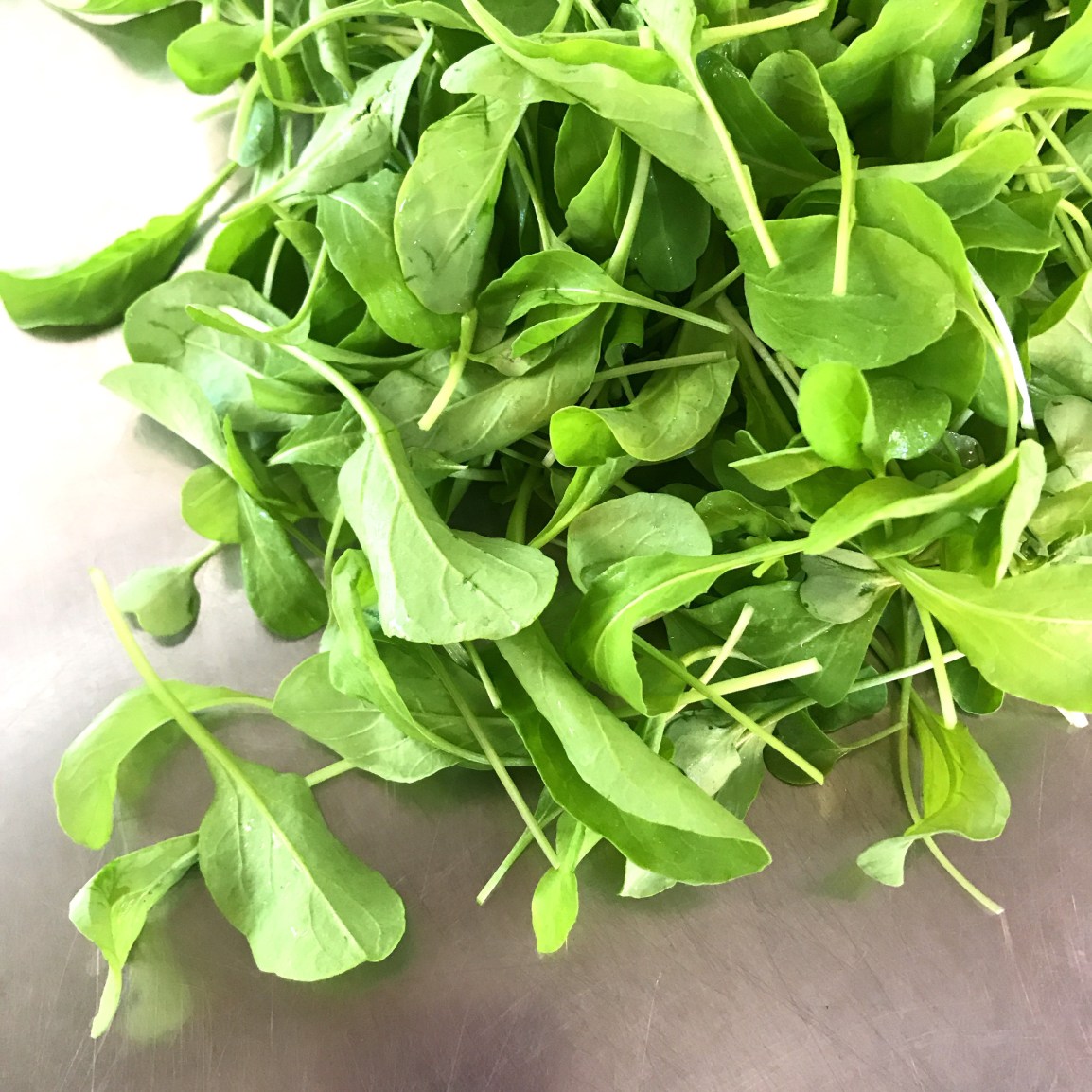
- bag of BABY ARUGULA or BABY SPICY salad mix: $12 each
- bag of SWEEEEEET salad mix: $7
fresh Mediterranean FIGS: $5
gorgeous sweet POMEGRANATES: $2-5 by size - THAI PUMPKIN!! in cut quarters: $3/lb. (around $4-6, as marked)
- BUTTERNUT and GREEN Guatemalan BUTTERNUT squash: $3.50/lb.
- cooking GREENS: $3/bunch (dandelion, Bok Choi, broccoli greens)
- baby CARROTS with juiceable tops: $3
- baby TURNIPS with edible greens and stems: $4
- 2 lb. CUCUMBERS: $6
- extra pint CHERRY TOMATOES: $6
extra slicer and heirloom TOMATOES: $5/lb.
Herb bunch choices for this distribution
(Available as EXTRAS, not included in farmshares this time.)
- Garlic chives
- Italian basil
- Thai basil
- Cilantro
- Dill
- Kaffir lime leaves
- Parsley
- Green onions
- Rosemary
- Lemongrass
Please contact us immediately by text and phone at (340)514-4873 if you have reserved a farmshare and cannot pick it up. Supply is limited, demand is extremely high and someone else will gladly purchase your share, if given enough time to respond. We have limited time for distributions and they are scheduled. Our produce is harvested fresh and needs to go home with you same day. This is an honor system since we are not collecting payment until pickup. We do not have cold storage for uncollected shares.
The signup form will show you a “Thank You” page and send you a confirmation email if submitted successfully. If you don’t find it, please check your spam and ‘all mail’ folders for the confirmation email, as this has been a common problem for several customers and with a little searching they typically find it.
Need help with the pre-order signup form? (Click here):
Q: I can’t seem to order more than one item.
A: We have designed our order form limit any one customer from cleaning us out. Sharing is caring. If you’d like extra of something (beyond what you could reserve through our order system), put it in the comments with your order, and remind us at your pickup time: if we can supply it to you we’ll do our best. If you are in the food service industry and looking for bulk availability, please contact us; our order form is for individuals and families to place a single order for a scheduled pickup.
Q: My order isn’t going through.
- if the automated confirmation email is not immediately found, check your spam folder and the ‘all mail’ folder
- make sure all required fields are filled/selected
- just try again
- use a cellular device (smartphone or tablet) that isn’t using WiFi internet
- restart your browser/device
- clear your cache and cookies in your browser/device
- reboot your router (unplug it for a minute and plug in again)
- visit our “help” page for additional tips
Q: The form says I didn’t enter my email, but I did.
Our pre-order form requires everyone to type their email in twice, and makes sure the two match exactly. We had a lot of customers in such a rush to get their order in that they’d spell their own email incorrectly and then complain that they could not find the confirmation email. Our ‘type it in twice’ system ensures that you’ll find any email mistakes before you submit the pre-order form.
Q: I ordered before, but I’m not getting your emails.
Our pre-order form does NOT automatically sign you up for an ARTfarm email subscription. Do that HERE!


 ARTfarm on St. Croix, USVI